

Nothing to See Here
On accountability, silence, and the cost of asking.

It’s late February 2026, and I have been sitting with something I don’t know how to put down.
It’s not rage. It’s not despair. It’s something quieter and more relentless than both. The specific exhaustion of watching things happen in plain sight and being told, over and over, that you’re not seeing what you think you’re seeing. That your instincts are wrong. That the feeling in your chest is the problem, not the thing that caused it.
This feeling lives in conversations that go quiet at a certain point. In the comments people type and delete. In the way a whole room will tense when someone finally says the thing out loud.
We have been handed, in just the last few months, more than most people can process in a lifetime. And we are being asked to process it quietly, quickly, and without too many follow-up questions.
I’m not willing to do that anymore.
So let’s talk about it, starting with Jeffrey Epstein. Because in some ways, everything starts there.
In late 2025, the Epstein Files Transparency Act was signed into law. A bipartisan bill, passed 427 to 1, requiring the Department of Justice to release all remaining files within 30 days. The word transparency right there in the name.
What followed is something I want to walk through slowly, because I think we’ve been encouraged to move past it faster than we should.
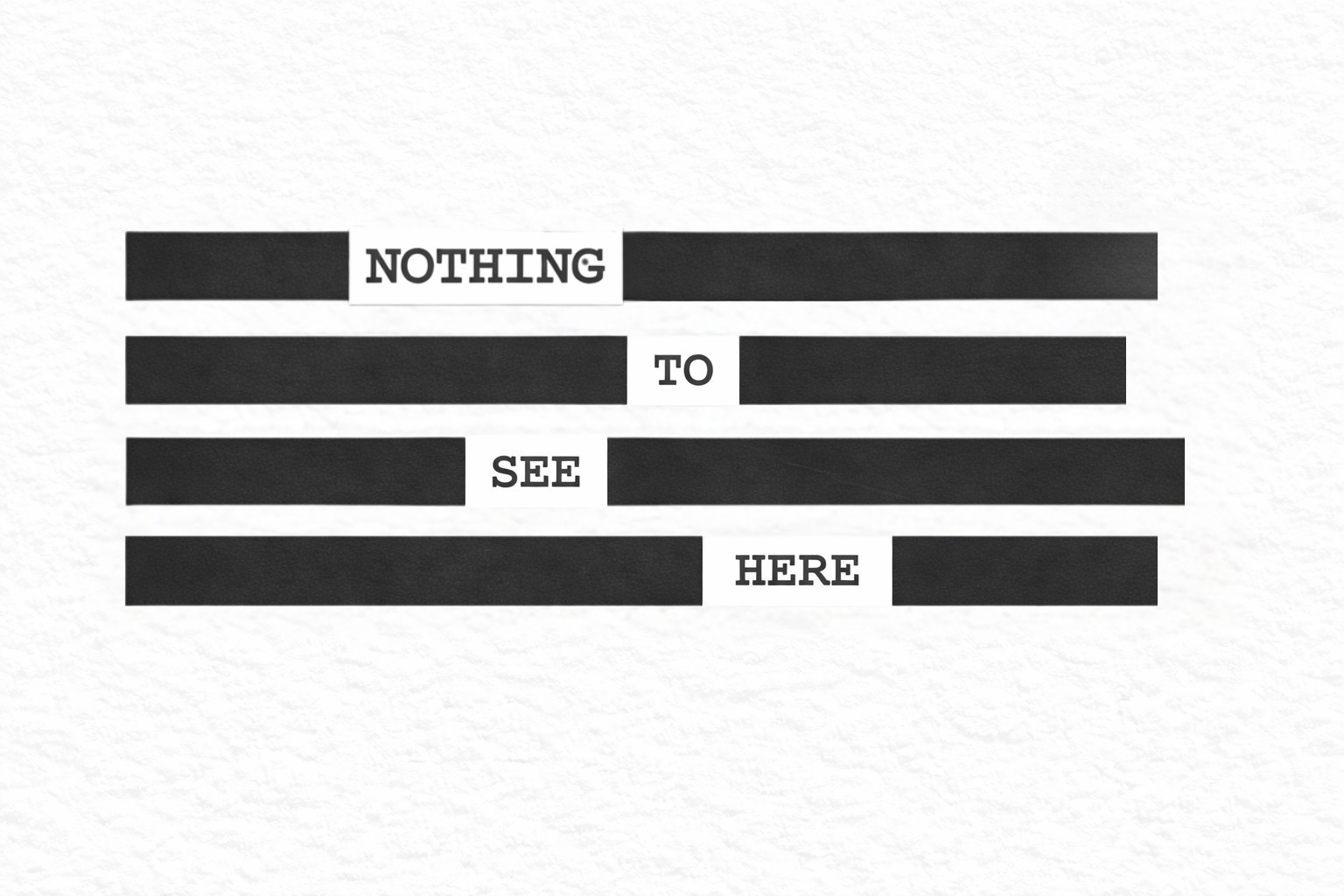
The DOJ violated its own legal deadline. They didn’t release everything on time. When documents did come, hundreds of pages were entirely blacked out. Redactions were so inconsistent that the same content would be redacted on one page and visible on another. Files disappeared from the government website after being posted. A photo of the sitting president was initially missing from the release. Democratic committee members asked publicly: what else is being covered up?
Then, through a technical flaw in the redactions, Americans discovered they could copy and paste the blacked-out text into other applications and read what the government had tried to hide.
And what is in those documents is not nothing.
Grand jury transcripts describe FBI agents recounting interviews with girls who were recruited to perform sex acts for Epstein. The youngest interviewee was 14. A 21-year-old testified that she had been recruited at 16, and went on to recruit girls from her high school, telling them to lie about their age. One document confirmed the FBI received a criminal complaint about Epstein’s abuse of children in 1996. Thirteen years before he was arrested. They did nothing.
The files document a network of some of the most powerful people on earth, people who appear repeatedly, in photographs, in flight logs, in emails, in contact books. Our current president. Former presidents. Scientists. Financiers. Royalty. Their names are there. In many cases, they are there more than once.
And the official response has been: just because someone’s name appears in the files doesn’t mean they’re guilty.
I want to be clear about something. I don’t want to believe that the people running this country had knowledge of crimes against children. I don’t think anyone does. Nobody is sitting at home hoping that’s true. What people are hoping for, what they are asking for, is a legitimate explanation that makes logical sense. A reason to believe that the presence of these names, this many times, in these documents, means something other than what it appears to mean.
That explanation has not been given.
The Deputy Attorney General released a letter stating the DOJ’s review found no evidence that could predicate an investigation against uncharged third parties. A CNN poll from January 2026 found that 49 percent of Americans are dissatisfied with how much the government has released, while only 6 percent are satisfied.
Two thirds of respondents said they believe the government is deliberately withholding information.
In January 2026, UN human rights experts reviewed the released materials and stated they contained disturbing and credible evidence of a possible global criminal enterprise. They said the alleged conduct could amount to crimes against humanity. They called for independent, thorough investigation and noted that resignations alone are not a substitute for criminal accountability.
Two thirds of Americans. UN human rights experts. These are not fringe voices.
And what we have been given in return is 3.5 million pages, extensive redactions, a violated deadline, disappearing files, and the instruction to stop reading into it.
Then we have the tragedy of Charlie Kirk’s public assasination.
On September 10, 2025, Charlie Kirk was shot and killed at Utah Valley University in Orem, Utah.
He was 31 years old. Mid-sentence. Three thousand people in that courtyard watched it happen, and the shooter was on a rooftop that nobody was watching.
What happened in the days after is the part that stays with me.
A man died in public, in daylight, at a university, in front of thousands of witnesses. And within days, the official response had turned almost entirely away from how did this happen and toward what are people saying about it online. Threats were made against speech. Organizations were flagged for potential terrorist designation. People were urged to report their coworkers for what they posted.
The security review of how that rooftop went unguarded is still ongoing. The preliminary hearing isn’t until May.
Those three thousand people standing in that courtyard deserved a real answer. So did his family. The most important question in the room, how did we let this happen and who failed, has been largely swallowed by everything else.
And I keep feeling that in my body. The pivot. The way attention moves so fast, so deliberately, away from the thing we should all be looking at.
Right now, the United States has the largest military presence in the Middle East since 2003. Aircraft carriers. Fighter jets. Countdown clocks issued via social media. Iran running joint drills with Russia and China. Neighboring countries refusing use of their airspace.
The honest, plainspoken explanation for why, delivered to the American people like we are adults who live here and will bear the cost, has not been given.
I keep reminding myself that there is a difference between a complicated world and a world where the people in charge have decided that explaining themselves is optional. We are living in the second one. And I think more of us feel that than are saying it out loud.
And then there is Gaza.
I’ve rewritten this section more than once, because I know what it costs to say certain things right now. And that cost, the fact that I feel it as I type, is itself part of what I’m trying to name.
So here is what is simply, provably true.
Since October 2023, the United States has provided at least $16.3 billion in direct military aid to Israel. Ninety thousand tons of arms on eight hundred transport planes and 140 ships. That is not my accounting. That is the Israeli Defense Ministry’s.
The Palestinian death toll in Gaza exceeds seventy thousand. A figure the IDF itself has accepted. The UN estimates 92 percent of Gaza’s residential buildings have been damaged or destroyed. Famine was declared by a UN monitor in August 2025. The International Criminal Court has charged Israeli leaders with war crimes and crimes against humanity.
Seventy thousand people.
I want to stop there for a moment, because I think we have been moving past that number in a way that frightens me. The way you move past something too large to hold.
Seventy thousand people that had names. Had children. Had mornings. Had something they were looking forward to.
I am not writing this to dismiss Jewish history or Jewish trauma or the real horror of October 7th. I’m not. Antisemitism is real, it is rising, and it has no place in any honest conversation. And in the same breath, because both things are true at once and we have to be brave enough to hold them both, I cannot look at seventy thousand dead and the systematic destruction of an entire civilian population and be silent about it.
These are human lives. Every single one. The hostages and the children in Kibbutzim and the children in Gaza and the aid workers and the journalists and the people who only ever wanted to live.
A Quinnipiac poll from August 2025 found 60 percent of Americans oppose sending more weapons to Israel. The American people and American policy are not in the same place.
And the space to simply ask why, not to hate, not to call for anyone’s destruction, just to ask whether this is right and whether we are allowed to examine it, keeps shrinking. People have lost jobs for it. Reputations have been quietly dismantled for it. The label arrives before the question is even finished.
When asking a question becomes a punishable act, something has gone very wrong. Not with the people asking. With the system that needs them not to.
Here is what I want to say to you, directly, human to human.
I’m a mom in Charlotte, NC. I read the news and I love my kids and I lie awake sometimes with a feeling I cannot fully name. This low hum of something being structurally, deeply wrong with the way the world is being managed right now.
Not just America. The whole thing. The global machinery that is supposed to exist, at least in theory, to protect human life and dignity. It doesn’t feel like it’s doing that. It feels reckless. Like the people holding the wheel have decided that accountability is for other people and honesty is a courtesy they no longer feel obligated to extend.
What I keep coming back to, underneath all of it, is something simple. We are being handed things, one after another, that don’t add up.
Documents that implicate and then don’t.
Security failures that go unanswered.
Wars that go unexplained.
A death toll that’s quickly scrolled past.
A request for transparency met with redactions and disappeared files and the instruction to trust a process that keeps proving itself untrustworthy.
And every time we say that out loud, we are told we are the problem.
I’m not asking for a perfect world. I’m not asking for a world without hard choices.
I’m asking for someone to look us in the eye.
To say: here is what is happening, here is why, here is how we are weighing the cost of it.
To say: your fear is not irrational. Your questions are not dangerous. You are not wrong for noticing.
That’s the whole ask.
And the fact that it feels like too much to hope for right now —
that’s what keeps me up at night.